

What It’s Really Like Living in a New Orleans Shotgun House

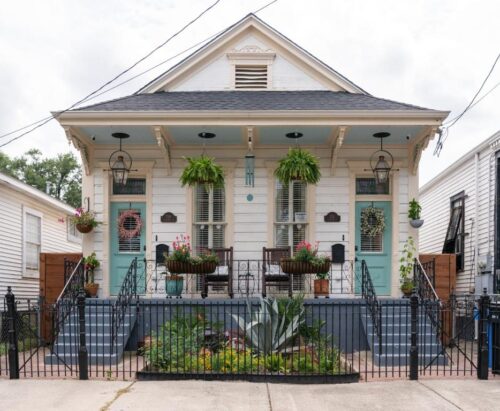
A home style that's uniquely New Orleans
If you’ve ever walked around neighborhoods like the Bywater, Uptown, Mid-City, the Marigny, or the Irish Channel, you’ve probably seen a shotgun house.
They’re one of the most recognizable types of homes in New Orleans. Long, narrow, colorful, and usually packed with character. Tourists love them because they feel so uniquely New Orleans. But actually living in one is a whole different experience.
Shotgun homes first became popular in New Orleans during the 1800s. The layout worked well on narrow lots, and before air conditioning existed, the design helped improve airflow during Louisiana’s long, hot summers.
Even the name “shotgun house” has an interesting history. Some historians believe the term may be connected to a Yoruba word introduced to Louisiana through West African cultural influences, though its exact origin remains debated. New Orleans has long been shaped by a blend of African, Caribbean, French, Spanish, and American influences, and many historians believe those cultural connections played a role in the development of the city’s unique architecture.
While the exact origins of the shotgun house are still debated today, the style has become one of the most recognizable symbols of New Orleans. These homes aren’t just historic buildings; they’re a reflection of the many cultures and communities that helped shape the city over generations.
Most shotgun homes are built in a straight line with rooms connected one after another. There are no hallways. You typically walk from the living room into a bedroom, then into another room, and eventually into the kitchen toward the back of the house. It looks cool and historic when you visit one, but living in one can definitely take some getting used to.
Privacy can also be one of the biggest adjustments when living in a shotgun house. Unlike many modern homes, shotgun houses typically don’t have hallways separating rooms. Instead, the rooms flow directly into one another from front to back.
That means getting to the kitchen may require walking through another room first. Depending on the layout, guests, roommates, family members, or even your partner may occasionally need to pass through spaces that would normally be more private in a traditional home.
For people who grew up in larger homes, it can feel a little unusual at first. But for many New Orleanians, it’s simply part of living in a shotgun house. Over time, you learn the rhythms of the home, adjust to the layout, and before long it starts to feel completely normal.
The Reality of Living in a Shotgun House
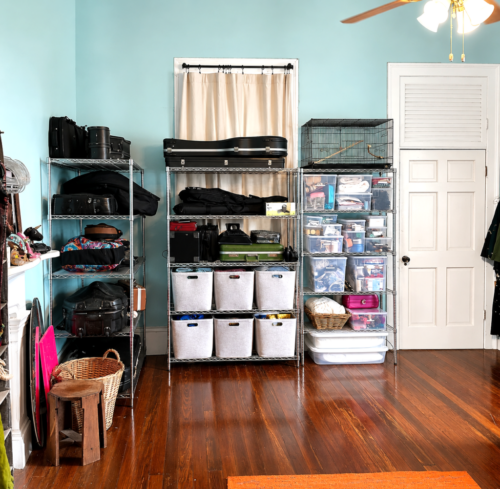
One of the biggest things people notice is how little storage space there is. Many older shotgun homes have barely any closets, if any at all. People living in them usually have to get creative with storage and making the space work.
Over time, many New Orleanians learn little tricks for making shotgun homes more functional. Things like using vertical storage, adding shelves, using furniture that doubles as storage, and getting creative with small spaces become pretty common in these homes. In a city full of older houses, learning how to make the most of your space is almost part of the culture.
Privacy can also be one of the biggest adjustments when living in a shotgun house. Unlike many modern homes, shotgun houses typically don’t have hallways separating rooms. Instead, the rooms flow directly into one another from front to back.
That means getting to the kitchen may require walking through another room first. Depending on the layout, guests, roommates, family members, or even your partner may occasionally need to pass through spaces that would normally be more private in a traditional home.
For people who grew up in larger homes, it can feel a little unusual at first. But for many New Orleanians, it’s simply part of living in a shotgun house. Over time, you learn the rhythms of the home, adjust to the layout, and before long it starts to feel completely normal.
The Features That Give Shotgun Houses Their Charm
But despite the quirks, shotgun homes have a charm that’s hard to explain unless you’ve actually spent time in one.
Many of the features people love most about shotgun houses were originally designed with New Orleans living in mind. The tall ceilings helped homes stay cooler before air conditioning existed, while large windows allowed more natural light and airflow throughout the house.
The front porch also plays a big role in the shotgun house experience. In many New Orleans neighborhoods, it’s common to see people sitting outside after work, talking with neighbors, or simply enjoying the evening. For many homeowners, the porch becomes an extension of the living space and another part of what gives shotgun houses their unique sense of community.
These homes have been around for generations. Some have been fully renovated with modern kitchens and updated interiors, while others still look much like they did decades ago.
Learning to Live With Less Space
One thing many shotgun homeowners learn fairly quickly is that every square foot matters. Unlike newer homes with large closets, bonus rooms, and extra storage areas, shotgun houses often require a more thoughtful approach to what you keep and where you put it.
Over time, many people become more intentional about storage, organization, and the belongings they bring into the home. It’s less about having endless space and more about making the most of the space you have. For many New Orleanians, that’s simply part of living in a historic home.
Living in a shotgun house usually means learning how to work with a smaller space and accepting a few odd layouts along the way. Sometimes they can feel cramped. Sometimes they can be inconvenient.
But they’re also part of what makes New Orleans feel so different from everywhere else. They have character, history, and a personality that’s hard to find in newer homes. Once you’ve lived in one, it’s easy to understand why so many people fall in love with them.